Writings.
Subscribe to The Lapidary, my Substack newsletter, for full access to new articles.
Scroll down to read excerpts of new articles and full versions of old articles.
Welcome to The Lapidary—where I regularly share my thoughts and gleanings on topics related to modern depth therapy, psychotherapy with soul, my specialties, and the modalities I use at Modern Depth Therapy, my psychotherapy practice. The Lapidary is also where I announce new workshops, groups, and publications.
The Lapidary: Then and now
The Lapidary started out as a blog on my former website when my private practice was called Lapis Healing Arts. New full articles are now available to subscribers of my Substack newsletter, which carries the torch of the name The Lapidary.
Old articles from the Lapis Healing Arts days are currently housed on this website in full. You can read excerpts of new articles on this website and access the full articles on my Substack.
What is the significance of the name The Lapidary?
According to Merriam-Webster, a lapidary (derived from the Latin lapis, meaning “stone”) refers to “a cutter, polisher, or engraver of precious stones.”
My psychotherapy practice’s former name—Lapis Healing Arts—honored the alchemical heritage of the lapis, a legendary vivid-blue stone. In alchemy, the lapis was thought to be the philosopher’s stone that turns dross into gold. Speaking metaphorically, the lapis is the substance within and without that transforms the most challenging aspects of life into qualities such as grit, compassion for self and others, and wisdom in action.
Therefore, The Lapidary name pays tribute to the important work of both therapist and client in shaping, refining, and polishing the lapis, the stone of transformation. In this way, I see therapist and client as dedicated craftspeople and artisans of the mind, body, and soul.
How to subscribe to The Lapidary Substack newsletter
To receive updates when new articles go live, as well as news about Modern Depth Therapy, sign up here.

There’s Passive-Aggressive and Then There’s Passive-Coercive: A Mindful Guide to Dealing with Covert Manipulation
Passive-coercion is behavior that is designed to subtly coerce or influence the behavior of another. Typically, the person or group responsible for the passive-coercive behavior is using passive-coercion to serve their own interests, often at the other party’s expense.
None of us is immune to it—practically all of us at some point have used passive-coercive tactics. Moreover, passive-coercion is often modeled for us and normalized in the overculture. It’s critical to learn to identify and respond to passive-coercion effectively, as failing to address it can result in unhealthy relationship dynamics and unvoiced resentment.
How to Support Someone Dealing with Job Loss
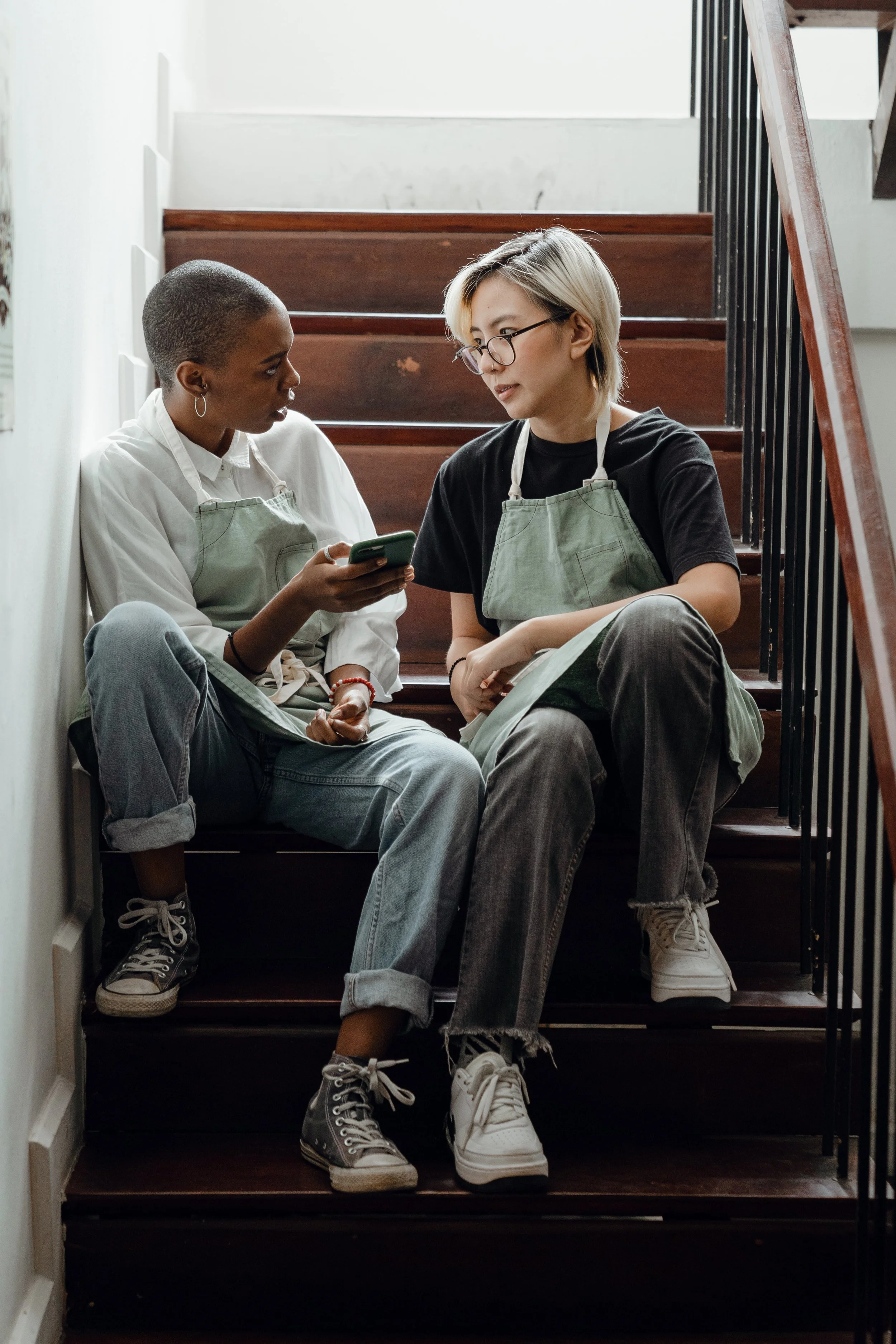
With the current spate of layoffs, you and/or someone you know may be reeling from a recent job loss. Ultimately, like all losses, a layoff often involves a grieving process.
Grief can look like depression, anxiety, anger, numbness, low energy, distractedness, cranking into restless activity (midnight LinkedIn doom-scrolling, anyone?), and many other things. In this blog post, learn some tips on how to provide emotional support to the laid-off people in your life from a place of sensitivity and self-awareness.

The Lock and Key Relationship Between Narcissistic Abuse and Codependency
According to the CPTSD Foundation, “People with codependency sometimes form relationships with [people with narcissism] and they develop complementary roles. The [person with codependency] has found a person they can pour themselves into and the [person with narcissism] has found someone who will always put them first.”¹ The needs and desires of each party in the relationship interlock in an ultimately destructive way that can feel like a train heading fast to nowhere—or, at the very least, a very painful destination.
Art is an alchemical process that’s fed by emotional energy.
“The greatest opportunities for creative transformation are often lodged in our discontents. Art is an alchemical process that feeds on emotional energy.
When we realize that a perfect equilibrium in our lives might not be the best basis for making art, then we can begin to re-vision our stress points. So rather than try to rid your life of tension, consider doing something more creative with it.”
—Shaun McNiff